


Get FP&A best practices, research reports, and more delivered to your inbox.
You made it. After three months of phasing, revisions, board decks, and spreadsheet acrobatics, the 2026 budget is locked and loaded.

But before you shut your laptop for the holidays, it’s worth stepping back to ask:
- What actually worked this year?
- Where did things break down?
- How do we make next year less chaotic?
This wrap-up pulls together insights from the six budgeting deep dives we put together in the last few months, each of which is based on findings from our annual budgeting survey.
Whether you're already prepping for Q1 or just catching your breath, this is your chance to learn from the cycle you just survived.
1. Budget kickoff & target design: Start fast and stay aligned
In the three-month sprint that is the annual budgeting process, getting off on the right foot is imperative. Yet too many teams stumble out of the gates. Expectations aren’t communicated clearly, and targets get lost in translation. Finance teams end up spending the next 12 weeks untangling confusion that could’ve been avoided on day one.
Top-performing teams treat week one like the most important week of the year. They don’t just hit “go”—they choreograph every step.
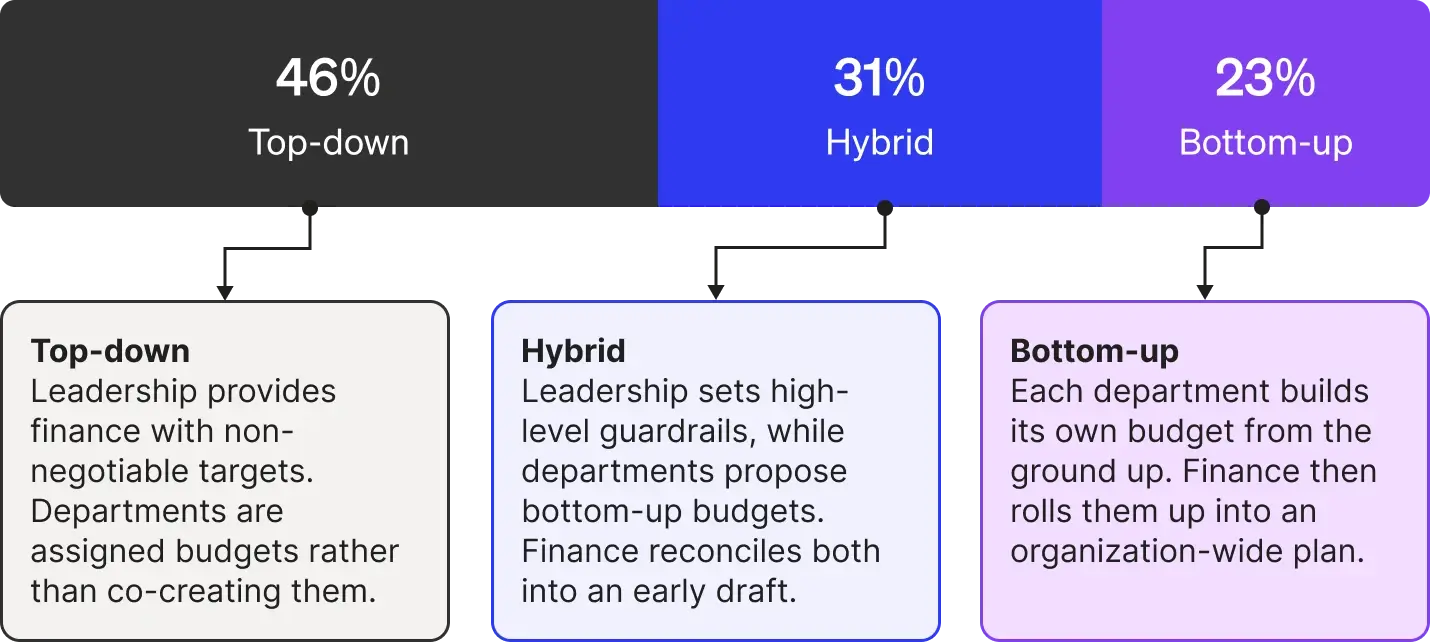
We recommend pairing directional guardrails from leadership—revenue ceilings, margin goals, hiring constraints—with bottoms-up inputs from department leads. This hybrid approach gives teams a clear runway without handcuffing their ability to plan realistically.
They time-box the kickoff week, too.
- Day 1 is for setting the rules of the game: growth and margin guardrails, macro assumptions, planning sequence.
- Days 2–3 are for template distribution.
- Day 4+ is for alignment meetings that clear up confusion before it snowballs.
And to ground the entire process, the best teams ship a one-page “macro + market” deck alongside the kickoff materials. It’s not a full-blown economic report—just a shared view on demand trends, pricing shifts, and key external assumptions.
{callout}
💡 Key takeaway: the best budgets start with a crisp kickoff that establishes shared assumptions and expectations.
{/callout}
Dig deeper:
- Read the full deep dive: Budget kickoff & target design: Start fast and stay aligned
- Check out our free sales capacity template
- Check out our free headcount planning template
2. Clear & consistent phasing: Structure that prevents rework
Proper sequencing matters more than speed during budgeting season. Each step in the process relies on the one before it. When the order’s off, the whole thing falls apart.
Unfortunately, a third of finance leaders in our budgeting survey admitted their budget phases overlap or lack consistency altogether.
Top teams avoid the chaos by locking in a structure from the start. The structure itself can vary—some kick things off with GTM inputs and revenue targets, while others begin with headcount. What matters is that everyone knows when it’s their turn and what they’re responsible for.
They also prioritize clean handoffs. No isolated decks or spreadsheets allowed. Finance distributes a shared, standardized template with required drivers, assumptions, and deadlines. Department heads know exactly what inputs they need to provide and when.
Then they run fast, focused cycles: draft → review → revise → align. That rhythm gives department leaders space to think, and FP&A the predictability it needs to keep the model moving forward.
{callout}
💡 Key takeaway: Clear phases and predictable handoffs make for a faster, cleaner, and far less chaotic budgeting process.
{/callout}
Dig deeper:
- Read the full deep dive: Clear & consistent phasing: Structure that prevents rework
3. Collaborative budgeting: How and why it breaks down
Ask any team if their budgeting process is collaborative, and the answer is almost always yes.
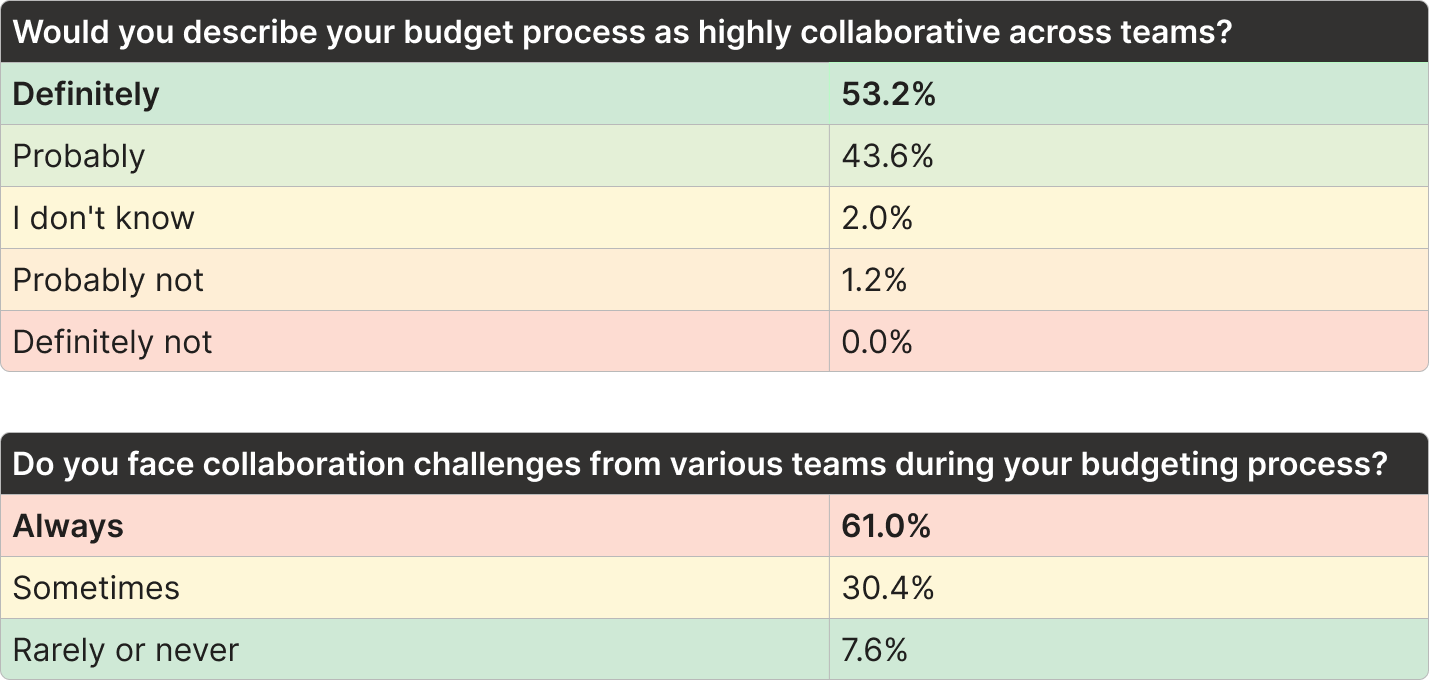
But the numbers tell a different story: 97% of finance leaders call it “highly collaborative,” yet 92% say collaboration is their biggest pain point.
That contradiction is what happens when each function operates with different timelines, priorities, and working styles.
Real collaboration is more than just vibes, or “the way we do things around here.” It demands real, intentional structure.
That starts with clear lines of ownership:
- Finance owns the model.
- Functional leaders own their assumptions.
- Execs own the final tradeoffs.
That structure keeps the process moving without inviting chaos.
{callout}
💡 Key takeaway: Real collaboration is a result of intentional structure, not vibes.
{/callout}
Dig deeper:
- Read the full deep dive: Collaborative budgeting: How and why it breaks down
- Collaborative budget planning and tracking solutions page
4. Budget ownership & accountability: Clear roles, clean handoffs
Budgeting is top of mind for finance throughout the fall, but department heads still have day jobs to juggle. Enforcing accountability while being amenable to competing priorities can be a high-wire act.
The process for easier for all involved when everyone knows exactly what they’re on the hook for. FP&A owns the model—structure, logic, guardrails—while assumptions belong to the people closest to the work. Sales owns pipeline, HR owns headcount, etc. That shift forces better thinking from the business, and frees up finance to focus on strategy, not data clean-up.
Instead of asking for “feedback,” high-functioning teams make clear asks. That aforementioned standard input template is critical here, as it eliminates any guesswork.
{callout}
💡 Key takeaway: clear roles build better budgets, faster. FP&A owns the model, functions own their inputs, and leadership owns the tradeoffs.
{/callout}
Dig deeper:
- Read the full deep dive: Budget ownership & accountability: Clear roles, clean handoffs
5. Iteration & board alignment: Avoid last-minute budget surprises
Everyone knows the first draft won’t be the final one. But instead of accepting this reality, many teams push for perfection in v1, then get knocked off course when significant feedback inevitably comes in.
Top finance teams approach it differently. They treat iteration as part of the plan, not a sign of failure.
They bake three formal passes into the timeline—each one with a clear purpose:
- V1: Directional. Surface big gaps and clarify open questions.
- V2: Tradeoffs. Pressure-test assumptions and sharpen decisions.
- V3: Near-final. Polish the narrative and prep for alignment.
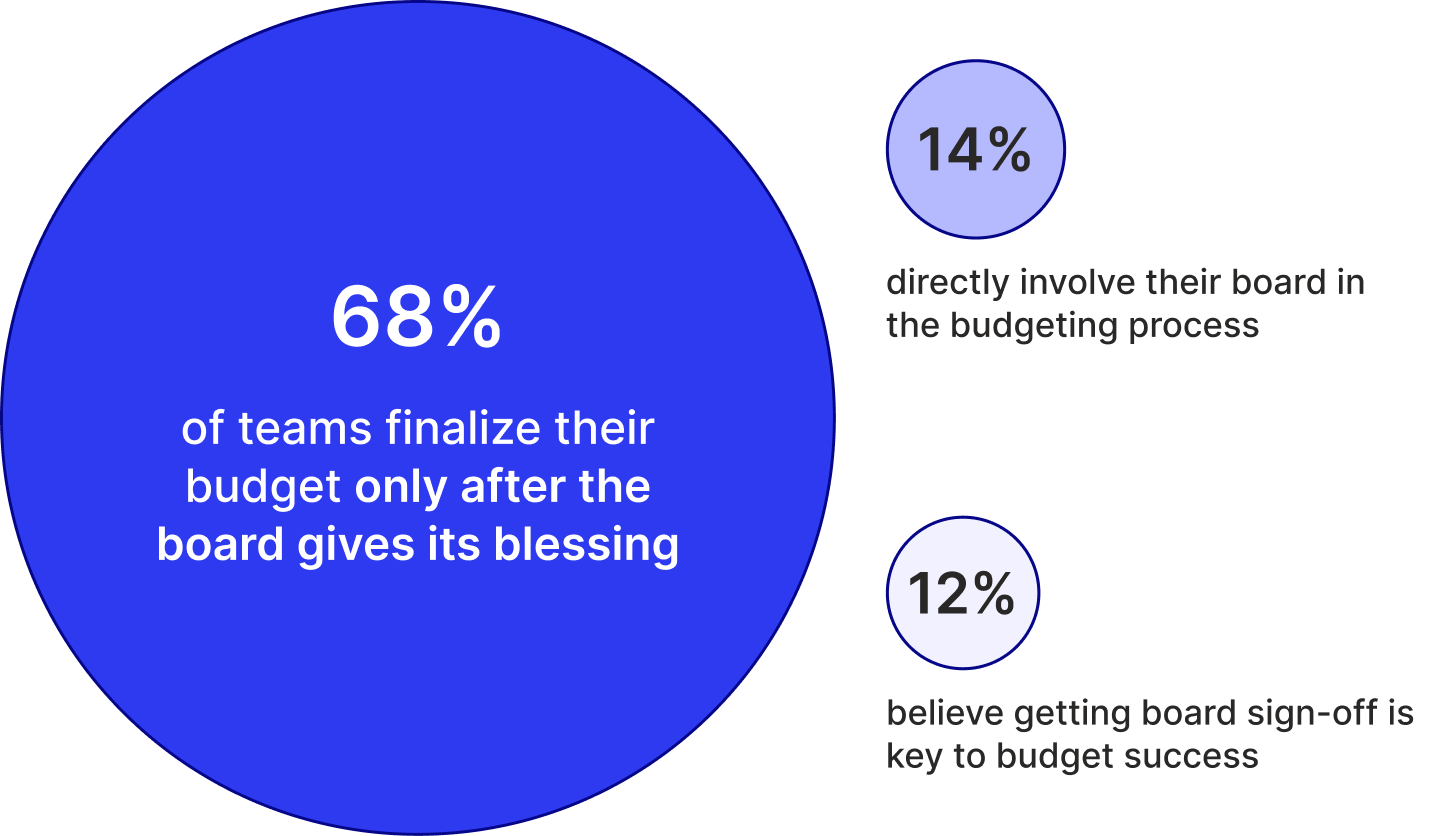
And they don’t wait until the end to engage the board. They bring directional targets, key constraints, and early tradeoffs to the table before the plan is fully baked. That way, leadership alignment happens upstream—not in the eleventh hour.
{callout}
💡 Key takeaway: iteration is part of the process. Plan for it, pace it, and use it to bring stakeholders along for the ride.
{/callout}
Dig deeper:
- Read the full deep dive: Iteration & board alignment: Avoid last-minute budget surprises
- Read our blog: How finance leaders can master board meeting prep
6. Tooling & models: Death, taxes, and spreadsheets
No matter how many tools a company buys, one thing hasn’t changed: Excel is still where the real work gets done.
That was the headline from this deep dive. Even teams with expensive planning platforms end up back in spreadsheets when the stakes are high. Not because they’re clinging to old habits—because Excel and Sheets still offer the speed, flexibility, and control that rigid systems struggle to match.
But that freedom comes with a hidden cost: friction.
Most teams don’t struggle because they lack software. They struggle because their tools don’t talk to each other. Pulling data from five systems and stitching it together manually isn’t a modeling problem—it’s a workflow problem.
Data consolidation remains the biggest drag on speed. Instead of analyzing the numbers, finance spends hours chasing them down: actuals from ERP, headcount from HRIS, pipeline from CRM, spend from procurement. Version control becomes a full-time job. One team’s working off V6, another’s in a copy of V4. Logic starts to splinter, and confidence in the model drops.
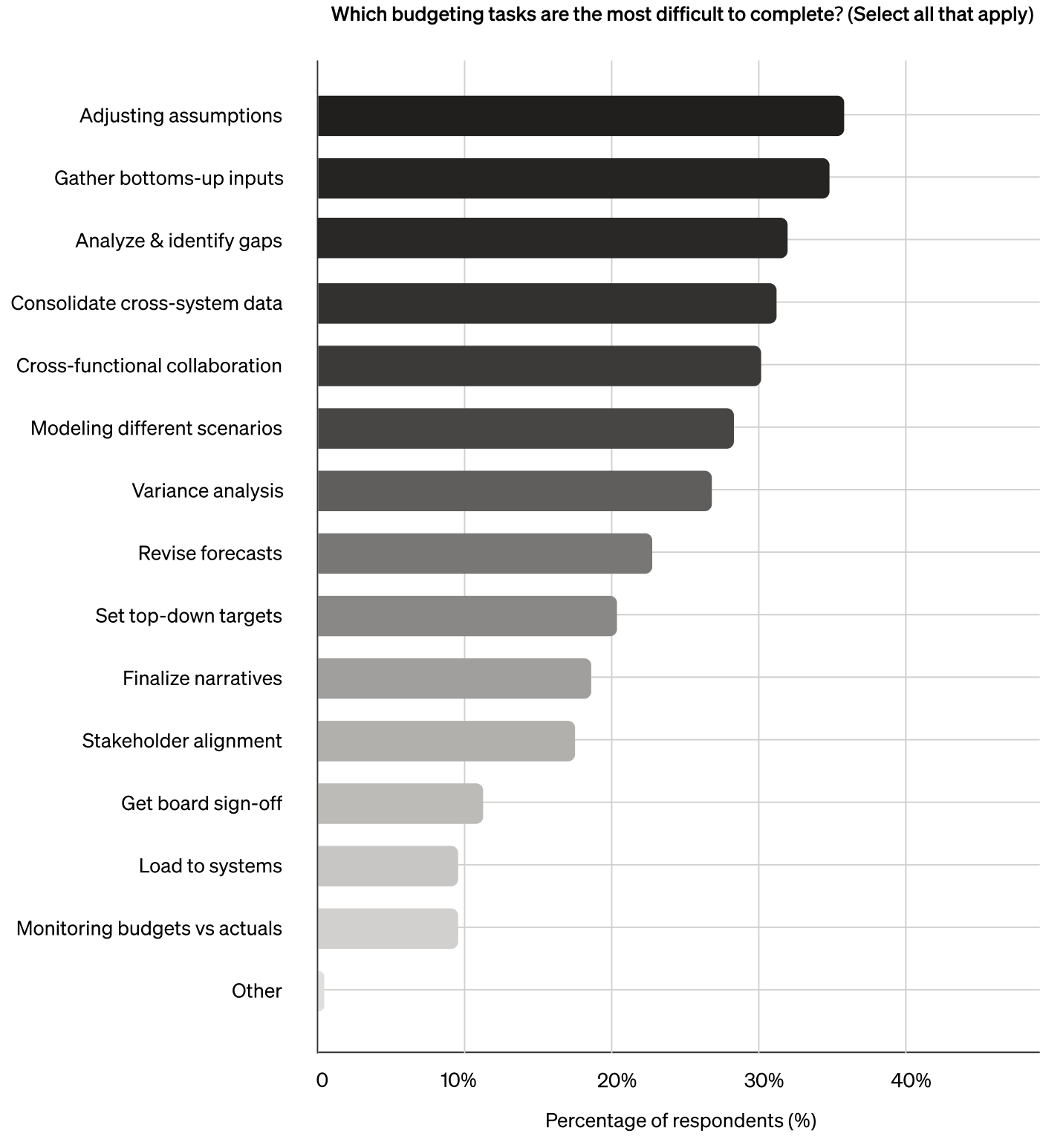
Top teams don’t fix this by buying another tool. They fix it by connecting the ones they already use.
They build workflows that sync data across systems. They templatize inputs so everyone’s speaking the same language. They automate refreshes so the model doesn’t go stale mid-cycle.
{callout}
💡 Key takeaway: great budgeting doesn’t mean giving up spreadsheets—it means supporting them with infrastructure that keeps them clean, current, and connected.
{/callout}
Dig deeper:
- Read the full deep dive: Tooling & models: Death, taxes, and spreadsheets
- Read our blog: Long Live the Spreadsheet: How finance’s favorite tool keeps reinventing itself
A smoother budgeting cycle starts here
Late nights and a few extra grey hairs will always be part-and-parcel of budgeting season. But right now is the time to take stock in what went well and what didn’t so you can make next year’s cycle a bit better than this one.
Get FP&A best practices, research reports, and more delivered to your inbox.