
Get FP&A best practices, research reports, and more delivered to your inbox.
You know those halftime shows where someone balances a stack of plates while riding a unicycle?
That’s kind of what it feels like to be a solo finance leader.

Everything is on your shoulders: closing the books on time and getting management the reports they’re looking for. Keeping models current and answering one-off pings from your CEO. And somehow finding the time for forward-looking strategic work.
I talk to these people on a daily basis. For a while, they can keep all the plates in the air.
Then things start breaking down slowly, and eventually all at once.
- The close starts slipping later into the month as persistent fires take precedence
- The CEO wants a board deck refresh, an updated runway model, and a hiring plan all by Thursday
- You haven't touched the strategic work you were actually hired to do in three weeks
Most have the same initial reaction: open a job req for a junior FP&A analyst.
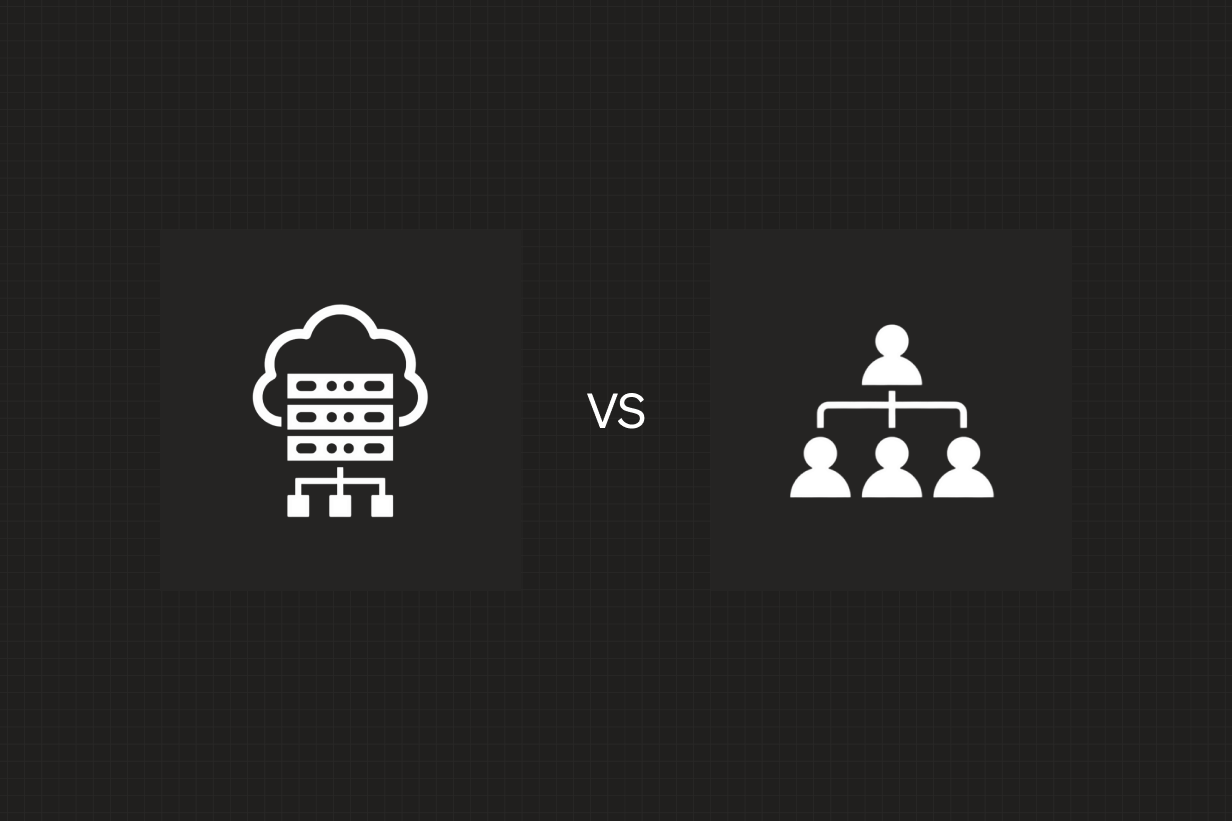
It seems like the most rational move, but it’s not the highest-ROI one at this stage. For most solo finance leaders, the better route is infrastructure first, headcount second.
Here’s why.
Let’s start with the numbers
A junior FP&A analyst in the US costs $80–120K fully loaded, conservatively.
Once they’re hired, you have to wait three to six months for them to ramp. During that ramp, you are the bottleneck. You're onboarding them, reviewing their work, fixing the spreadsheet they broke. Your output goes down before it goes up.
And here's the part that gets glossed over: at the end of all that, you still own the infrastructure gap. You just own it across two people now instead of one.
A second person doesn't fix a broken process
If your weekly rhythm is manual exports from QuickBooks, copy-paste into Excel, reformatting for the board deck, chasing variance explanations one DM at a time…adding headcount doesn't fix any of that. It doubles the manual throughput.
You also create a new problem: process knowledge that lives in two heads instead of one, with no documentation and no system of record. Now neither of you can take a vacation during close.
I've watched this play out enough times to recognize the pattern. Six months after the hire, the team is still drowning. The analyst is doing the same manual work the lead used to do, just in parallel. The lead is now also a manager. Nothing has actually been solved.
What "infrastructure" actually means at this stage
When I say infrastructure, I'm not talking about a bigger ERP or a six-month implementation. I mean the unglamorous stuff that takes manual work off your plate:
- Actuals that flow in from QuickBooks or Xero automatically, without an export-and-reformat ritual
- A budget vs. actuals view that updates against a live budget you control
- AI-assisted variance analysis that flags what's material before you have to go looking
- Shared dashboards that redirect ad-hoc data asks away from your inbox
- Runbooks that capture how the work gets done, not just the output
The solo finance leaders I see breaking out of the trap get this stack in place before they hire, not after.
The benchmark has moved
Cursor is doing roughly $6M of ARR per employee. Anthropic, Midjourney, and a handful of other AI-native companies are in the same range. A decade ago that number was closer to $200–400K for a healthy SaaS business.
Cursor may be an outliner, but the assumption that growth requires linear headcount expansion is increasingly outdated. AI tools like Claude are enabling lean teams to do far more than they used to. When paired with a trusted data layer like Aleph, solo finance leaders can drastically leverage their output in ways that weren’t possible even a year ago.
If you’re a one- or two-person finance team at a growing company, that should be encouraging news. The ceiling on what you can run solo is a lot higher than it used to be.
When a hire is the right move
Obviously, a solo finance leader will need another headcount at some point.
A person is genuinely the right next investment when:
- You're in a multi-entity or multi-currency setup that's outgrown what tooling alone can absorb
- Your revenue model is unusual enough (usage-based, marketplace, complex deferred) that the analytical work itself is a full-time job
- You're heading into a fundraise, an M&A process, or an org redesign that needs dedicated bandwidth
- The work that's drowning you is judgment work, not throughput work
The sequencing question is what matters. A great hire walking into connected data and documented workflows is roughly 10x the impact of the same hire walking into a folder of spreadsheets and tribal knowledge.
Why I'm writing this
I run the SMB motion at Aleph, which means I spend most of my week talking to solo and lean finance leaders trying to figure out what to do next. The pattern I described in the opening is the single most common conversation I have.
We built Essentials specifically for this stage. It's a starting point designed for one- to two-person teams who need their actuals automated, their reporting templated, and their data centralized before they grow into something more complex. The customers who get the most out of it treat it as the foundation that comes before the next hire.
If you're staring at a job rec right now and the math feels uncomfortable, that's probably worth listening to. Happy to talk it through, even if it ends with "yeah, you should hire."
Connect with me on LinkedIn and let's keep the conversation going.
Get FP&A best practices, research reports, and more delivered to your inbox.