

Get FP&A best practices, research reports, and more delivered to your inbox.
What do Tuesdays, the 10th of the month, and 8pm all have in common?
If you know someone in FP&A, they were probably knee-deep in a spreadsheet.
At Aleph, we have a front-row seat into the working patterns of finance teams. So, we decided to look back at our 2025 usage data to see what we could learn: when teams were busiest, when they had lulls, and what it all means for leaders going into 2026.
Here’s what we found.
Tuesday’s gone (with the wind)
Finance teams had a lot of Garfields in 2025.

Our data showed that Tuesday was their most active day of the week. That wasn’t a total shock, and neither was the fact that activity on Tuesdays was 33% higher than on Fridays.
But what caught our eye was the 27% increase in activity between Mondays and Tuesdays.

What caused this gap?
One major driver was likely that finance teams spent Mondays heads-down on “work about work:” catching up on email, Slacks, and whatever else piled up over the weekend. In fact, a study from Asana showed that nearly 60% of an employee’s time is spent coordinating work, not actually doing it.
For finance teams, Tuesday, then, became the true execution day spent refreshing reports, analyzing trends, and answering stakeholder questions in Aleph after a Monday buried in their inbox.
The takeaway for 2026
There’s nothing inherently wrong with Tuesday being more active than Monday. But if your team’s “real work” doesn’t start until day two, it’s worth asking why.
Sometimes the fix is better tooling, such as automating the reporting and reconciliation work that eats up time on Mondays. Other times, it’s about setting clearer priorities before the week begins: carving out time for team planning on Friday, or aligning on what matters most before Monday morning hits.
Whatever the lever, the goal is the same: less time coordinating, more time executing.
The 10th was the busiest day of the month
Across every month of the year, the 10th consistently stood out as the most active day for finance teams.

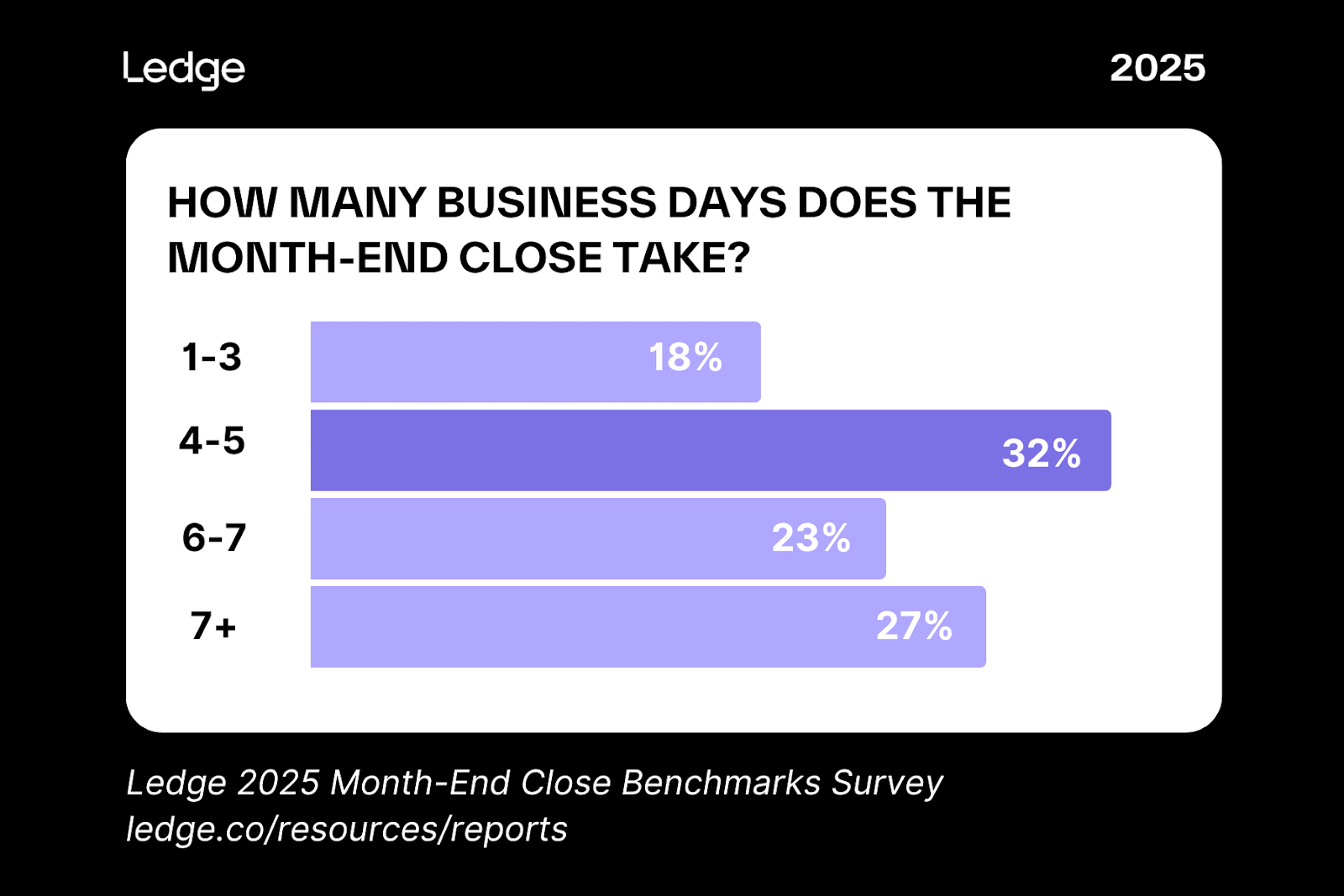
That tracks. By the 10th of the month, most finance teams have either just finished the month-end close or are right at the tail end of it. Data from close management vendor Ledge backs this up—they found that most teams require between 4 and 7 business days to close the books.
As soon as actuals get locked (and sometimes even before then), it’s time to switch gears to forecasting mode. No surprise, then, that tools like Aleph go into overdrive at this point in the cycle.
It’s also when the inbound rush begins. Department leads are asking for updated views of headcount and budget availability. Execs want to know how last month’s results are shaping this month’s outlook. Finance is being hit with asks from all sides, and they need trustworthy answers ASAP.
The takeaway for 2026
Any time savings that finance teams can get at this point in the month is worth its weight in gold. And there’s a lot of low-hanging fruit out there—FP&A trends reports that 46% of FP&A time is spent on mundane data collection and validation tasks rather than analysis.
Here are some ways to free up more time for your team to focus on the “A” in FP&A:
- Shrink the gap between close and forecast. Push for automation in reconciliations and variance workflows so you’re not wasting the 6th through the 9th chasing numbers. For more on how to unify your accounting and FP&A workflows, check out this blog post and webinar.
- Standardize your source of truth. A single source for headcount, expenses, and plan vs actuals means fewer follow-up questions and faster responses.
- Anticipate the ask. Use templates and AI prompts (like the ones in our finance AI prompt playbook) to speed up answers to common exec and department questions.
The end-of-month lull
Astute observers will have noticed in the above chart that, after the peak in activity on the 10th, there’s a comparatively slow period near the end of the month.
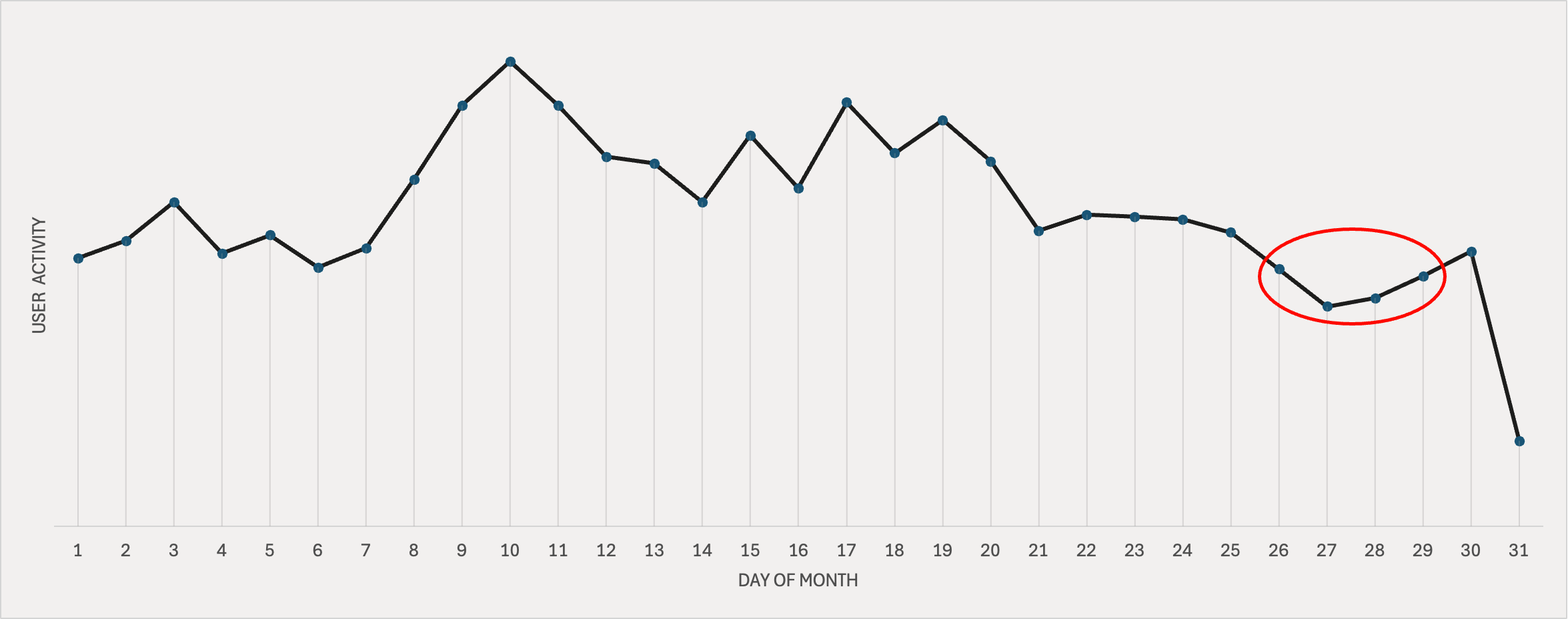
This is one of the few times when teams can come up for air and tackle less urgent projects. For finance leaders, it’s a prime opportunity to check in on longer-term initiatives that may have been pushed aside during higher-pressure weeks.
That might mean revisiting planning assumptions, reviewing tooling gaps, or kicking off a process improvement effort that’s been waiting in the backlog.
But proceed with caution. Your team needs a bit of chill time to avoid burnout, especially during intense periods like budgeting season.
The takeaway for 2026
Use this lull to your advantage, but don’t overdo it. Schedule a few check-ins on longer-term roadmap items while leaving some breathing room on your team’s calendars.
The “second spike”
Most Aleph usage happened between 9am and 5pm local time. But after this predictable high came a second surge starting around 8pm.

Many of you are probably nodding along reading this. We certainly were as we saw the trend in the data emerge. Logging back on once you have some quiet time—after dinner, once the kids are down—is a habit that seems to have stuck post-pandemic. Whether you call it the triple peak day or the second spike, post-8pm work is on the rise.
Like all the other time use trends we’ve observed, this one isn’t inherently concerning. Some folks find the idea of evening work unthinkable, while others see it as their preferred moment of focus.
It only becomes a problem when:
- Finance teams start doing it as a hustle badge of honor
- Teams aren’t leveraging AI and automation to save time during the day
The takeaway for 2026
Evening spikes should happen for the right reasons. Here’s how to make sure that happens:
- Automate the daily wrap-up: Use LLM prompts to generate daily summaries, prep next-day talking points, or flag anomalies before shutting your laptop.
- Push for better async workflows: Teams with clear dashboards and push/pull reporting need fewer evening recaps and less Slack ping-pong.
- Draw a bright urgency line: Not every “EOD” request deserves a 9pm response. Align with stakeholders on what’s urgent and what can wait.
What this tells us about the state of finance in 2026
Every finance team is being asked to do more with less. Some are burning the midnight oil to keep up, while others are leaning on AI and automation tools to offload the grunt work.
LLMs like ChatGPT, Claude, and Gemini are some of the most powerful tools available to finance. But they’re still woefully underutilized because many teams don’t know where to start.
So we pulled together 15 high-impact, finance-specific prompts to help teams get more out of AI in 2026. Whether you’re just starting to experiment or using LLMs every day, there’s something in here to help you work more effectively.
Get FP&A best practices, research reports, and more delivered to your inbox.